
Online Couples Therapy & Counselling in Vancouver, BC

Loud or quiet, sudden or years in the making, it’s worth facing together.

Couples therapy for the cycles, the distance, and whatever this relationship needs next.

I work with each of you, equally attuned, emotionally focused, relational, and paying attention to what’s actually happening between you.

30 to 40 minutes, just a conversation.
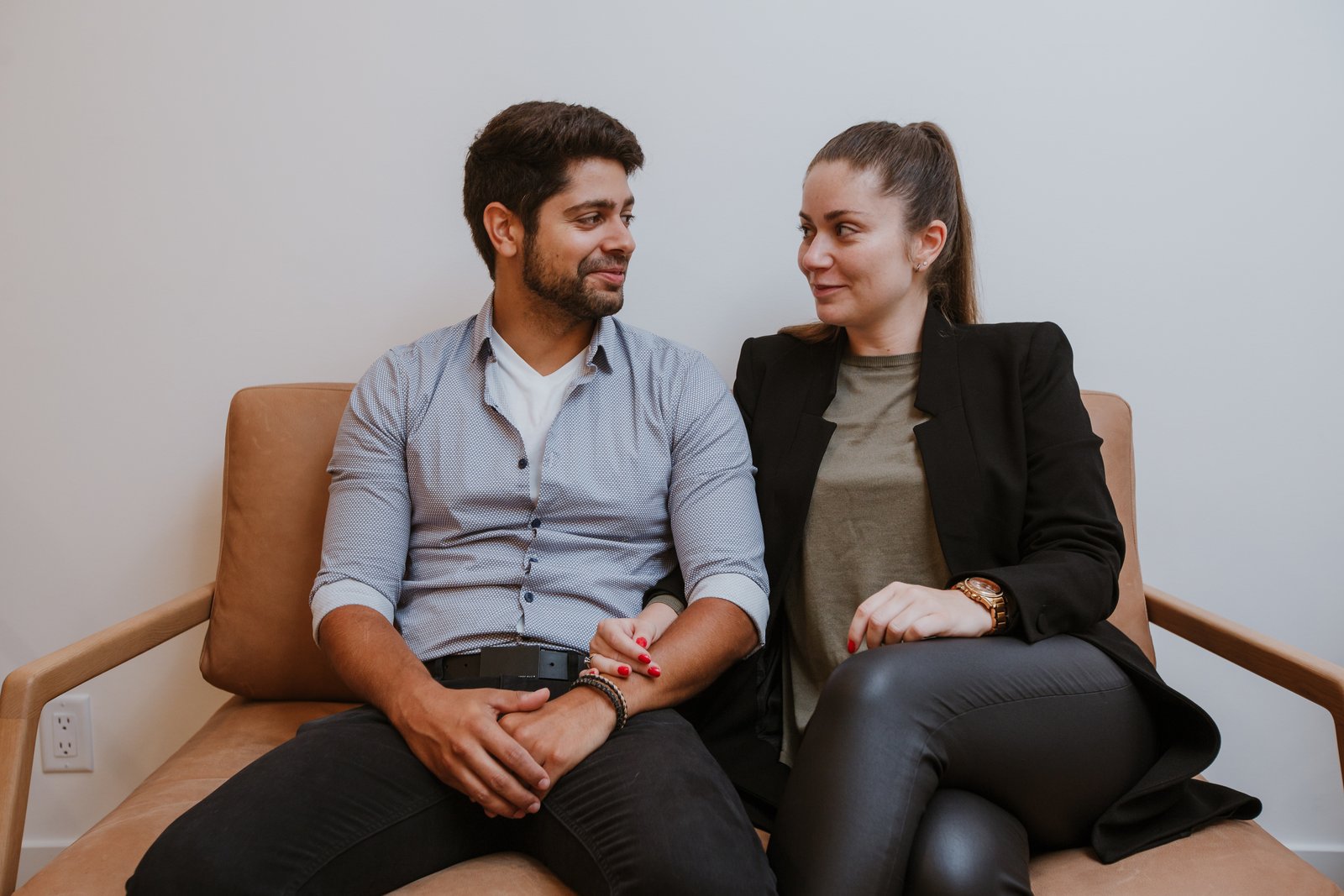
Couple sitting close together holding hands, representing couples therapy in Vancouver

WHAT BRINGS COUPLES HERE

We look at the cycle between you, what each of you brings to it, and what’s happening right now.

A dread that settles in the moment you feel it starting, because you already know the shape it’s going to take. We work on what’s actually driving it, so it’s not just the same fight again.

A loneliness that doesn’t quite make sense, because the person causing it is sitting right next to you. It crept in slowly, and it’s real, even without a single fight to point to. We work on understanding how it took hold, and open up what it might take to feel close again.

The specific frustration of trying again, and watching it go sideways anyway. One of you shuts down, the other escalates, and reaching harder only pushes the other further away. We work on understanding the loop, so what you’re saying actually has a chance to land the way you mean it.

Not frustration, something quieter and lonelier, the sense of being invisible to the person who’s supposed to know you best. We work on what’s standing in the way of that, opening the possibility to be seen and understood again.

The jolt of going from fine to not-fine in seconds, and the exhaustion of never quite trusting the calm to hold. Maybe you already know why. Getting there, together, is often the real work. We work on building real emotional regulation, more space between feeling something and reacting to it.

The particular ache of not knowing how to come back together after something’s gone wrong. Conflict and rupture are common, they happen in every relationship. We treat repair as an ongoing practice, not a single conversation. Done well, it can bring you closer, not just back to where you started.

A quiet awareness that something could use attention, even though nothing’s actually wrong. Most of us were never taught how to show up well in a relationship, only shown by example, for better or worse. Here, we explore what that looks like for you, and build something more intentional than what you grew up around.

A slow drift you can feel but can’t quite name, different directions, different rhythms, a real question about what the relationship is for now. We work on finding out together, whatever the answer turns out to be.

The particular grief of realizing repair might not be the goal anymore, and not knowing how to hold that honestly. Sometimes the work is separating with real clarity, or figuring out what you actually want next. Even an ending can be something you build together, not something that just happens to you.

The awkwardness of not knowing how to bring it up, so it just doesn’t get brought up. We make room to talk about desire, touch, and closeness directly, without embarrassment, opening the possibility of reconnecting there too.

The disorientation of realizing the relationship you built doesn’t quite fit the life you’re living now. A new baby, a blended family, a move, a career shift, retirement. We work on building its next shape, together.

Relationships don’t sort themselves into categories. Whatever brought you here, loud or quiet, there’s room for it.

what the work looks like

We start where you are.
Be met.

Arrive as you are, and we get a sense of whether this feels right, together. Send that email or book a free consultation. That is where it begins.
Go there.

We work with the relationship itself, the shared space you’ve built together. The cycle, the history, the hard parts and the joyful ones, all of it belongs here.

Find ground.

Something real shifts, how you find yourself in the relationship, and what the relationship means to you. More freedom from the old cycle. More room for what you’re actually building, together.
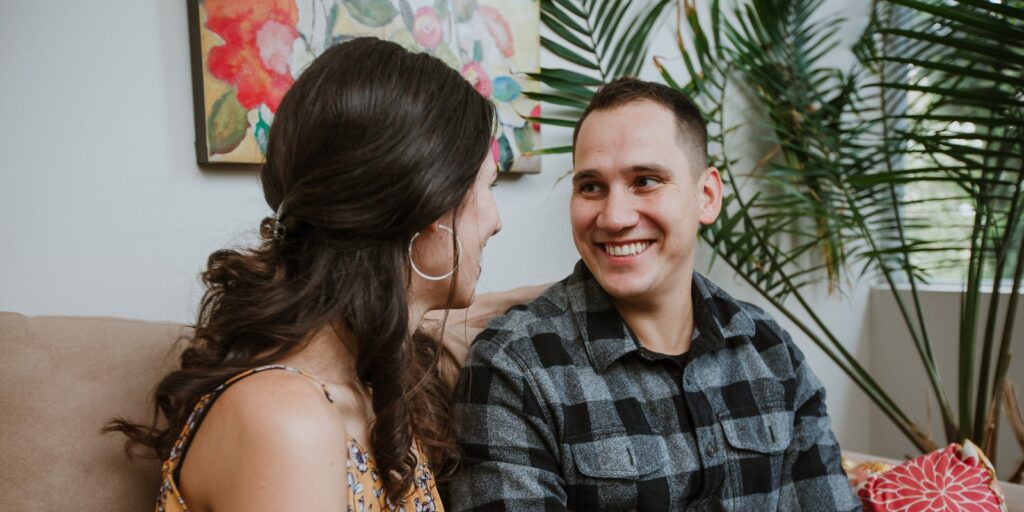
Couple in conversation, smiling, in a warm living room setting — couples therapy in Vancouver, BC

Is this the right fit

This works for relationships where conversation is still possible.

Who This Is a Good Fit For

Even when it’s difficult, that might mean repair, might mean understanding each other more clearly, or might mean separating with real clarity instead of more damage. Warmth isn’t a requirement. What’s needed is a willingness from everyone involved to sit in the room and stay open to what surfaces.

who may not be a good fit

If safety is at risk in the relationship, through abuse, intimidation, or coercive control, couples counselling isn’t appropriate or safe here. I’m glad to help connect you with more appropriate support.

I also don’t diagnose psychiatric conditions or manage medication. If a crisis needs immediate support, or if one person’s individual mental health needs are the primary concern, I’m glad to help find the right referral, alongside this work or instead of it.

Couples sessions are $187.50 for 75 minutes or $225 for 90 minutes. Full details, including extended health coverage and cancellation policy, are on the Fees page.

Questions

Things people often ask.

Full engagement from everyone involved tends to produce the most meaningful results, but one person feeling uncertain at the start is completely normal. If someone is attending only because they feel pushed into it, that’s worth naming honestly, since real engagement matters more than certainty going in. The free consultation is a good place to explore where each of you is starting from.

One person reaches out or escalates, the other withdraws or shuts down. Both responses make sense as ways of managing distress, but together they create a cycle where no one feels fully heard. Therapy helps each of you understand your part in it, and build something steadier, together.

Attachment styles are patterns formed early in life for how we connect and manage closeness or distance. They shape how we respond when we feel threatened or disconnected. Recognizing these patterns as they happen, in real time, is often some of the most useful awareness a couple can build. Understanding your own attachment style, and each other’s, can change how you interpret one another’s behaviour and what you reach for when things get hard.

The Gottman Method is one of the most extensively researched approaches to couples therapy, focused on building friendship, managing conflict constructively, and creating shared meaning. Gottman Method training is currently underway and already informs the couples work offered here. Specific certification will be noted once training is complete.

Many couples notice a shift within the first few sessions, not a resolution of everything, but a change in how the conflict is held. Deeper change can take longer for some couples, and that’s normal. There’s no fixed timeline, and you always have a say in pace and duration.

Occasionally, an individual session is useful as part of the couples work. This is always discussed openly and agreed to by everyone involved beforehand. I don’t see someone individually and as part of a couple on an ongoing basis at the same time.

Yes. Some of the most effective work happens before patterns become entrenched. If you’re sensing distance, noticing a recurring dynamic, or simply want to invest in what you have, this is a valuable space, not just a resource for crisis.

RTCc stands for Registered Therapeutic Counsellor (Candidate), a designation through the Association of Cooperative Counselling Therapists of Canada. MPCC-P stands for Master Practitioner in Clinical Counselling (Provisional), through the Canadian Professional Counsellors Association. Both are recognized by many extended health benefit providers, check with yours directly using either designation.

A psychiatrist is a medical doctor who can diagnose mental health conditions and prescribe medication. A psychologist can diagnose and often provides psychological testing, but cannot prescribe. A counsellor works primarily through the therapeutic relationship itself, talk-based, process-based support, without diagnosing or prescribing. Many people work with more than one at the same time, depending on what they need.

It’s a genuine conversation, not a sales call. We talk about what’s bringing you here, how I work, and you get a real sense of whether this feels like the right fit. From there, whether to continue is entirely your call.

Yes, with a few limits required by law. What’s shared stays within our work together, except in situations involving risk of serious harm, suspected harm to a child, or a court order. If an individual session is ever part of the work, we’ll agree together on how that information is handled before it happens, nothing said privately becomes part of the joint work without that agreement.

The Free consultation

If something here resonated, a free consultation is a good place to start.


Thirty to forty minutes, just a conversation to see how this feels.

Or reach out by email at cyrus@cyruscounselling.ca or 778.907.9888